
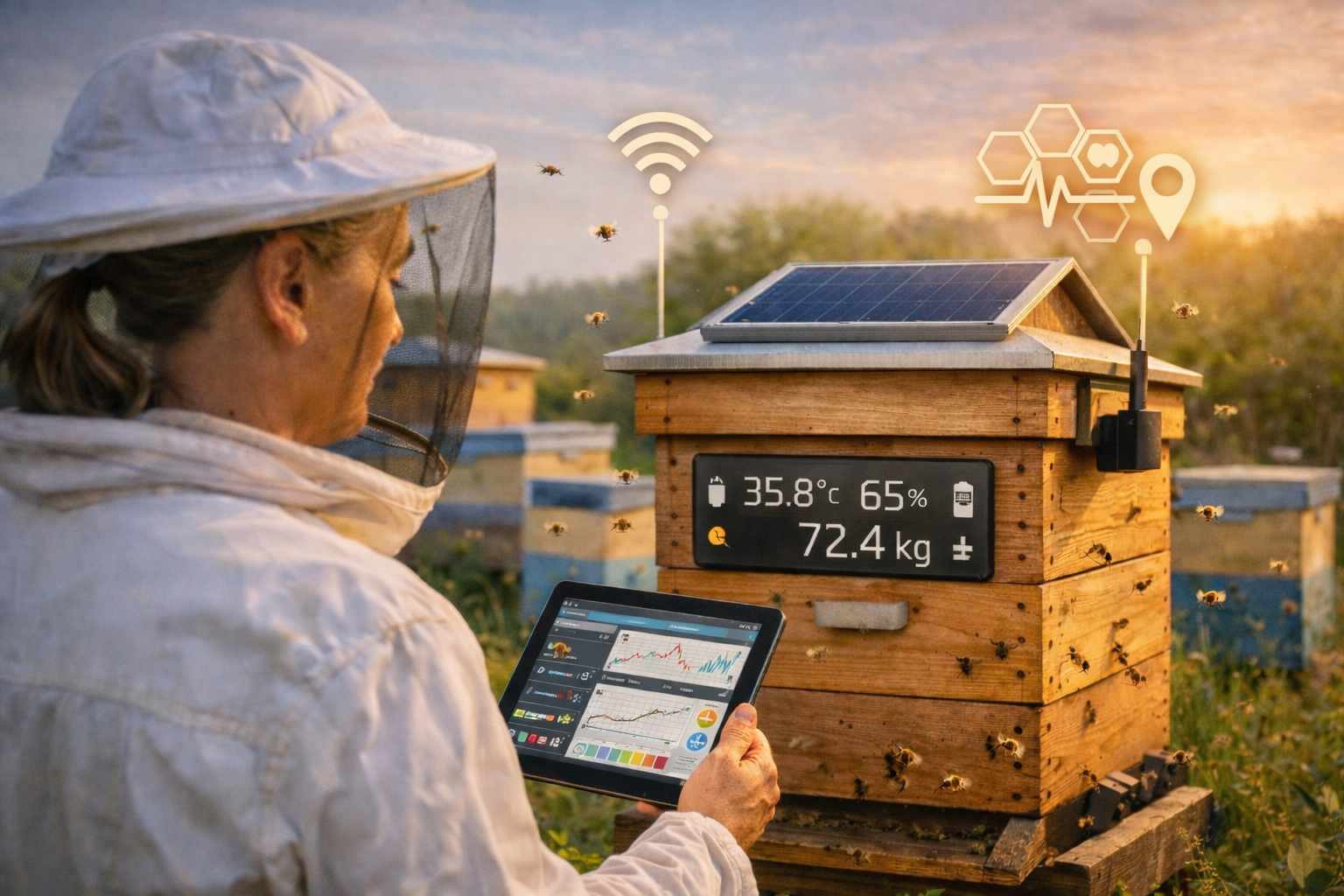
If you’ve been anywhere near beekeeping over the past few years, you’ll have seen the pitch. A sleek dashboard, a tidy graph, a quiet promise that you can finally understand what’s going on inside the hive without cracking it open. I’ve bought into it myself more than once. And like most people, I’ve had moments where I thought, this is it — this is going to change everything. And then, a few weeks later, you’re staring at a squiggly line wondering whether it means nectar flow, a swarm, or just a windy Tuesday.
Smart hive monitoring promises fewer inspections, fewer losses, and better decisions. After a decade of hype, the question most beekeepers are asking is simpler: does it actually help you manage bees, or just generate more data?
The promise vs the reality
Smart hive systems usually combine one or more of the following: hive weight measurement, internal temperature sensing, humidity tracking, and cloud dashboards with alerts. On paper, it’s compelling. Continuous insight without disturbing the colony. Early warning of swarming, starvation, or collapse.
In practice, most beekeepers discover something quickly: the hardware works far better than the interpretation.
The sensors rarely fail. The meaning of the data is where things become ambiguous.
What hive scales genuinely do well
Weight data is the most valuable signal smart hives provide. Daily weight curves can clearly show nectar flow beginning or ending, sudden losses from swarming or robbing, and long-term trends that reveal whether a colony is actually progressing or stagnating.
Used properly, scales reduce unnecessary inspections. They tell you when something has changed, not what to do. That distinction matters.
What they do not do is replace opening the hive, checking brood patterns, or assessing queen quality.
Temperature and humidity: useful, but easy to misread
Internal temperature sensors are often marketed as brood detectors or winter survival tools. They can be – but only in context. Stable temperatures usually indicate clustering or brood presence; sudden drops can indicate problems. However, sensor placement, hive configuration, insulation, and local weather all influence readings.
Humidity is even trickier. High humidity isn’t automatically bad. Dry hives can starve faster than damp ones. Many dashboards imply certainty where none exists.
Alerts: the most over-promised feature
Most systems offer alerts for weight loss, temperature drops, or “swarm risk”. In reality, false positives are common, and inexperienced users often react too quickly.
The best use of alerts is not urgency – it’s prioritisation. They help decide which hives to visit first, not when to panic.
Power, connectivity, and the rural reality
Battery life and connectivity are the silent deal-breakers. Apiaries are often in marginal coverage areas, and frequent data uploads drain power fast.
Systems that assume perfect cellular coverage or daily uploads often disappoint. Low-power, infrequent transmission models align better with real apiary conditions, especially for remote apiary use.
Who smart hive monitoring is actually for
These systems make the most sense for:
- Beekeepers managing multiple apiaries
- Remote or conservation hives visited infrequently
- Commercial or semi-commercial operators tracking nectar flow timing
They are less useful for:
- Single-hive beginners
- Beekeepers who enjoy frequent inspections
- Anyone expecting automation rather than decision support
Three Established Hive Monitoring Systems Worth Knowing
If you are looking at hive weight, temperature and humidity monitoring, these are three of the best-known names in the smart hive world.
 Weight + Temp + Humidity
BroodMinder
A very recognisable name in digital beekeeping. BroodMinder combines hive scales with internal temperature and humidity sensors.
Explore Weight + Temp + Humidity
Arnia
A well-established remote monitoring platform with strong alerting and threshold-based insights across weight, temperature and humidity.
Explore Temp + Humidity + Scale
BeeHero
An enterprise-focused platform combining in-hive sensing with wider analytics and commercial pollination insights. Quality data for pollination.
ExploreThe verdict
Smart hive monitoring has finally reached a point where the hardware is mature, reliable, and affordable. The limiting factor is no longer the technology – it’s interpretation, restraint, and beekeeper experience.
Used as a decision-support tool, it earns its place. Used as a shortcut to beekeeping skill, it disappoints. That said even the amateur beekeeper is likely to get a kick out of being able to monitor even a single hive from the mobile app when perusing the wine section at the supermarket or sipping a coffee with a friend. That’s only natural and human – bragging rights, curiosity and the pure love of bees!